More Value from Every Barrel. A Smaller Footprint from Every Field.
Albatik helps Libyan operators navigate the energy transition on their own terms — turning decarbonization from a compliance burden into a source of recovery, revenue, and international competitiveness.
The Service.
The energy transition is often framed as a threat to hydrocarbon producers. For Libya, it is also an opportunity. CO₂ and produced gas based enhanced oil recovery (EOR) can unlock incremental reserves from mature fields while permanently storing carbon underground. Emissions reduction, particularly flare gas recovery — converts waste into marketable products. And credible sustainability performance is increasingly a precondition for international financing and partnership. Through our subsurface engineering expertise and our international partner – Ryder Scott, Albatik provides the technical foundation for all three.
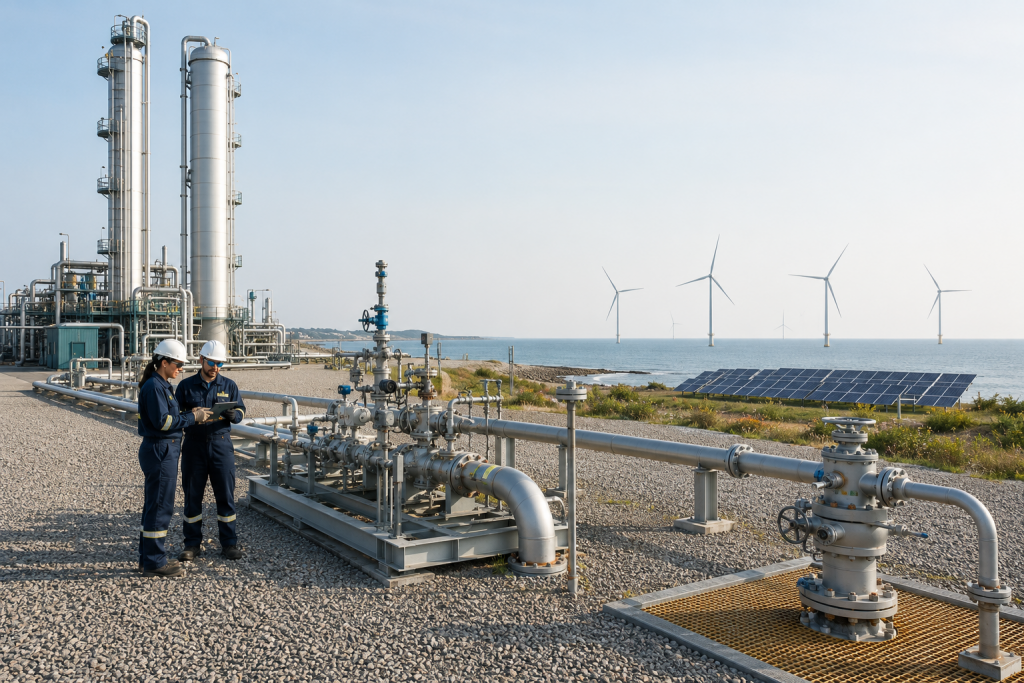
Libya’s mature onshore fields — many producing at recovery factors well below their potential — are natural candidates for CO₂-EOR, and the country’s gas flaring represents both a lost revenue stream and a reputational cost with international partners. Operators who quantify their CCUS potential and emissions baseline today will be the ones positioned for tomorrow’s carbon-linked financing, partnership, and export frameworks.
Why This Matters for Libya Now

Capabilities
Our team combines deep reservoir engineering expertise with the screening tools, simulation platforms, and phase-behavior know-how required to evaluate CCUS and CO₂-EOR opportunities rigorously — including miscibility assessment, storage capacity estimation, containment risk analysis, and full-field compositional simulation modelling capabilities.
- CO₂-EOR screening, MMP assessment, and injection scheme design
- Carbon capture, utilization, and storage (CCUS) site screening and capacity estimation
- Compositional simulation of CO₂ injection and storage
- Emissions baseline assessment and reduction roadmaps
- Flare gas recovery and monetization studies
- Geothermal energy pathway assessment for co-produced and repurposed wells
- Sustainability reporting support aligned with international frameworks